

| Category | Knee Arthroscopy |
Knee injuries and joint disorders can significantly affect your ability to walk, exercise, climb stairs, or participate in daily activities. Whether caused by sports injuries, ligament tears, meniscus damage, cartilage injuries, or chronic knee pain, early diagnosis and the right treatment are essential for restoring normal knee function. When conservative treatments such as medications, physiotherapy, and rest fail to provide lasting relief, Knee Arthroscopy in Dwarka offers a minimally invasive solution for diagnosing and treating various knee conditions.
Dr. Sourabh Shah provides advanced orthopaedic care with a patient-focused approach at 82A, Pocket 2, Sector 6, Pocket 2, DDA Flats, Dwarka, New Delhi. Every patient undergoes a comprehensive clinical evaluation to identify the exact cause of knee pain and receives a personalized treatment plan tailored to their condition and activity level.
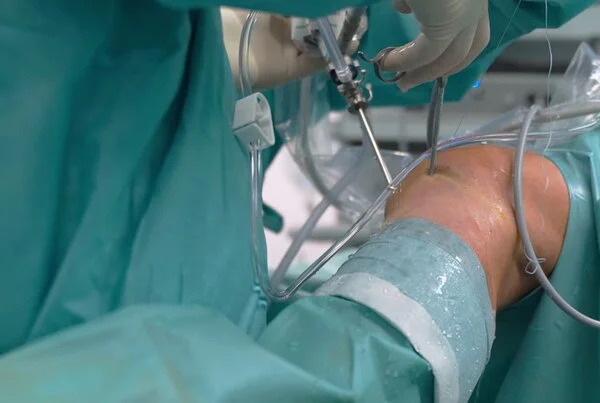
Using modern arthroscopic techniques, Knee Arthroscopy allows surgeons to treat knee problems through small incisions using a specialized camera and miniature surgical instruments. This approach minimizes tissue damage, reduces pain, shortens hospital stays, and supports faster recovery compared to traditional open surgery. Dr. Sourabh Shah is committed to helping patients regain mobility, reduce pain, and return to their active lifestyle safely and effectively.
Knee Arthroscopy in Dwarka is a minimally invasive orthopaedic procedure used to diagnose and treat a wide range of knee joint conditions. During the procedure, a small camera called an arthroscope is inserted through tiny incisions, allowing the surgeon to view the inside of the knee on a high-definition monitor.
Specialized instruments are introduced through additional small incisions to repair or remove damaged tissues. Knee arthroscopy is commonly performed for ligament injuries, meniscus tears, cartilage damage, loose bone fragments, inflamed joint lining, and other internal knee problems.
Because the procedure requires only small incisions, patients generally experience less pain, minimal scarring, reduced risk of complications, and quicker rehabilitation compared to conventional open surgery.
You may be a suitable candidate for Knee Arthroscopy in Dwarka if you experience:
A detailed clinical examination along with X-rays or MRI helps determine whether arthroscopy is the appropriate treatment.
Choosing Knee Arthroscopy in Dwarka offers several important benefits:
Small incisions reduce tissue damage and surgical trauma.
Patients usually recover more quickly than with open surgery.
Smaller incisions result in reduced discomfort after surgery.
Tiny surgical incisions leave less noticeable scars.
Direct visualization of the knee joint allows precise diagnosis.
Many ligament, cartilage, and meniscus injuries can be repaired during the same procedure.
Many arthroscopic procedures are performed as day-care surgeries.
Patients often resume daily activities and rehabilitation sooner.
Dr. Sourabh Shah follows a systematic approach to ensure safe and successful outcomes.
The process begins with a detailed medical history, physical examination, and imaging studies such as MRI or X-rays to identify the exact knee problem.
The treatment plan is customized according to the patient's diagnosis, age, activity level, and overall health.
Knee arthroscopy is performed under spinal or general anaesthesia, depending on the procedure and patient requirements.
Small incisions are made around the knee. An arthroscope is inserted to examine the joint, while specialized instruments repair damaged structures such as ligaments, cartilage, or meniscus.
The tiny incisions are closed with sutures or adhesive strips and covered with sterile dressings.
Patients begin guided physiotherapy soon after surgery to restore strength, flexibility, and joint function.
Recovery after Knee Arthroscopy in Dwarka varies depending on the condition treated and the complexity of the procedure.
Recovery typically includes:
Many patients recover within a few weeks after minor procedures, while ligament reconstruction may require several months of rehabilitation.
Choosing an experienced orthopaedic surgeon contributes to better surgical outcomes and recovery.
Dr. Sourabh Shah provides:
At 82A, Pocket 2, Sector 6, Pocket 2, DDA Flats, Dwarka, New Delhi, patients receive high-quality orthopaedic care in a professional and supportive environment.
Ignoring knee injuries can result in worsening ligament damage, cartilage deterioration, chronic pain, instability, and early arthritis. Timely consultation allows for accurate diagnosis and appropriate treatment before the condition progresses further.
Early arthroscopic intervention often improves recovery, preserves knee function, and helps patients return to work, sports, and everyday activities more quickly.
Persistent knee pain or injury should not prevent you from living an active life. Knee Arthroscopy in Dwarka is an advanced minimally invasive procedure that effectively diagnoses and treats various knee conditions while promoting faster recovery and improved joint function.
Dr. Sourabh Shah is dedicated to providing personalized orthopaedic care using modern arthroscopic techniques and comprehensive rehabilitation. If you are experiencing knee pain, instability, or sports-related injuries, schedule a consultation to explore the best treatment options and regain pain-free movement.
Looking for Knee Arthroscopy in Dwarka? Book an appointment with Dr. Sourabh Shah at 82A, Pocket 2, Sector 6, Pocket 2, DDA Flats, Dwarka, New Delhi, for expert diagnosis, minimally invasive treatment, and comprehensive knee care.
Knee arthroscopy is commonly used to treat meniscus tears, ACL injuries, cartilage damage, loose bodies, synovitis, and certain sports-related knee injuries.
No. It is considered a minimally invasive procedure performed through small incisions using an arthroscope and specialized surgical instruments.
Recovery depends on the condition treated. Minor procedures may recover within a few weeks, while ligament reconstruction can require several months of rehabilitation.
Yes. Physiotherapy plays a vital role in restoring knee strength, flexibility, stability, and overall function after surgery.
The timeline varies depending on the procedure performed and individual recovery. Your surgeon will advise when it is safe to resume sports and high-impact activities.