


| Category | PCL Reconstruction Surgery |
A Posterior Cruciate Ligament (PCL) injury is a serious knee injury that can affect joint stability, mobility, and overall knee function. The PCL is one of the strongest ligaments in the knee and plays a crucial role in preventing the shinbone from moving backward relative to the thigh bone. PCL injuries commonly occur due to road traffic accidents, sports injuries, falls, or direct impact to the front of the knee. If left untreated, a severe PCL tear can lead to chronic knee instability, pain, cartilage damage, and early arthritis. If you are looking for PCL Reconstruction Surgery in Dwarka, timely diagnosis and expert orthopaedic care are essential for achieving the best possible recovery.
Dr. Sourabh Shah provides comprehensive diagnosis and advanced ligament reconstruction at 82A, Pocket 2, Sector 6, Pocket 2, DDA Flats, Dwarka, New Delhi. Every patient undergoes a detailed clinical examination and imaging studies to accurately assess the injury and develop a personalized treatment plan.
Using modern arthroscopic techniques, PCL reconstruction is performed through small incisions, minimizing tissue damage and supporting faster recovery. Combined with a structured rehabilitation program, the surgery helps restore knee stability, improve mobility, and enable patients to safely return to their daily activities and sports.
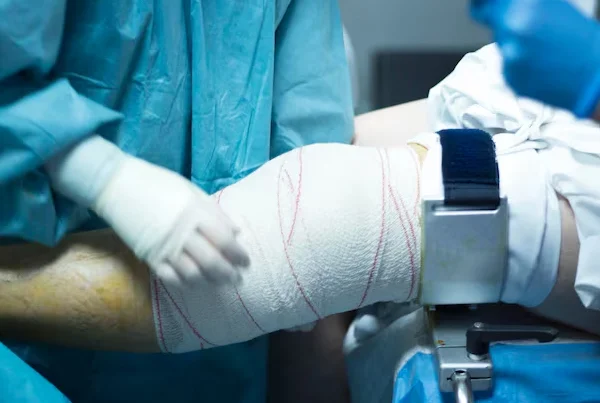
PCL Reconstruction Surgery in Dwarka is a minimally invasive arthroscopic procedure performed to replace a torn posterior cruciate ligament using a tendon graft. Unlike minor PCL sprains that may heal with conservative treatment, complete tears or severe instability often require surgical reconstruction to restore normal knee function.
During the procedure, the damaged ligament is replaced with a tendon graft obtained either from the patient's own body (autograft) or from a donor (allograft), depending on the patient's condition and surgical plan. The graft is securely fixed within the knee to recreate the function of the original ligament.
Arthroscopic surgery offers precise visualization of the knee joint while reducing pain, scarring, and recovery time compared to traditional open surgery.
You may be a suitable candidate for PCL Reconstruction Surgery in Dwarka if you experience:
A detailed physical examination and MRI are usually required to confirm the diagnosis and determine the most appropriate treatment.
Choosing PCL Reconstruction Surgery in Dwarka offers several advantages:
Reconstructs the damaged ligament for improved joint stability.
Reduces discomfort associated with ligament injuries.
Enhances walking, climbing, and athletic performance.
Arthroscopic surgery uses small incisions with less tissue damage.
Modern surgical techniques promote quicker rehabilitation.
Reduces the risk of cartilage wear and early arthritis.
Supports safe return to physical and sporting activities.
Improves joint stability and preserves knee function.
Dr. Sourabh Shah follows a comprehensive treatment protocol for successful ligament reconstruction.
A detailed medical history, physical examination, and MRI evaluation help determine the severity of the PCL injury.
The most suitable graft type and surgical technique are selected according to the patient's condition, age, and activity level.
The procedure is usually performed under spinal or general anaesthesia.
Small incisions are made around the knee. An arthroscope is inserted to visualize the joint, and specialized instruments are used to remove the damaged ligament and position the new graft accurately.
The tendon graft is secured using advanced fixation devices to restore normal ligament function and knee stability.
The surgical incisions are closed with sutures or adhesive strips and covered with sterile dressings.
Patients begin a structured physiotherapy program designed to restore strength, flexibility, balance, and knee function.
Recovery after PCL Reconstruction Surgery in Dwarka depends on the severity of the injury and adherence to the rehabilitation program.
Recovery generally includes:
Most patients experience significant improvement over several months with consistent rehabilitation.
Choosing an experienced orthopaedic surgeon is important for successful ligament reconstruction and long-term recovery.
Dr. Sourabh Shah offers:
Patients receive expert orthopaedic care at 82A, Pocket 2, Sector 6, Pocket 2, DDA Flats, Dwarka, New Delhi, in a modern and patient-friendly environment.
Ignoring a significant PCL injury can lead to chronic instability, abnormal joint movement, cartilage damage, meniscus injuries, persistent pain, and early osteoarthritis. Early diagnosis and appropriate treatment improve recovery, protect the knee joint, and reduce the risk of long-term complications.
Timely intervention allows patients to return to work, sports, and daily activities with improved confidence and knee function.
A PCL injury can have a lasting impact on knee stability and overall mobility if not treated appropriately. PCL Reconstruction Surgery in Dwarka offers an effective solution for restoring ligament function, relieving pain, and protecting the knee from future damage through advanced arthroscopic techniques and comprehensive rehabilitation.
Dr. Sourabh Shah is committed to delivering personalized orthopaedic care tailored to every patient's needs. Whether your injury results from sports, trauma, or an accident, you can expect expert treatment focused on restoring knee strength, stability, and long-term joint health.
If you are looking for PCL Reconstruction Surgery in Dwarka, schedule a consultation with Dr. Sourabh Shah at 82A, Pocket 2, Sector 6, Pocket 2, DDA Flats, Dwarka, New Delhi, for expert diagnosis, advanced arthroscopic ligament reconstruction, and comprehensive rehabilitation.
PCL reconstruction is a minimally invasive arthroscopic procedure that replaces a torn posterior cruciate ligament with a tendon graft to restore knee stability.
No. Mild or partial PCL injuries may heal with conservative treatment, including bracing and physiotherapy. Surgery is usually recommended for complete tears, significant instability, or combined ligament injuries.
Recovery varies depending on the severity of the injury and rehabilitation progress. Most patients require several months of physiotherapy before returning to full activity.
Yes. Physiotherapy is a vital part of recovery and helps restore strength, flexibility, balance, and knee stability while reducing the risk of re-injury.
Yes. Many patients return to sports after completing rehabilitation and receiving medical clearance, although the timeline depends on individual recovery and functional progress.