


| Category | Pain Management |
Persistent back, neck, arm or leg pain can sometimes occur because a spinal nerve becomes irritated or compressed. When medicines, physiotherapy and other conservative measures do not provide adequate relief, a Specialized Nerve Root Block in Sector 6 Dwarka may be considered as a targeted treatment option. Dr. Sourabh Shah provides orthopaedic evaluation and personalised treatment planning for patients experiencing nerve-related spinal pain.
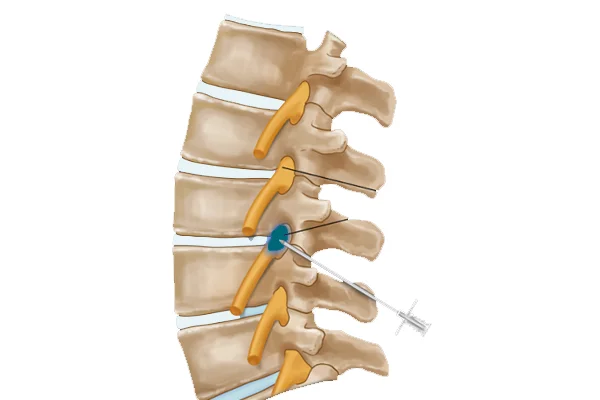
A nerve root block involves delivering medication close to a specific spinal nerve root. Depending on the patient's condition, the injection may contain a local anaesthetic and an anti-inflammatory steroid. Image guidance may be used to help accurately position the needle near the affected nerve.
The treatment may provide pain relief and can also help doctors understand whether a particular nerve root is responsible for a patient's symptoms. It is not suitable for every patient, so a detailed clinical assessment and appropriate imaging may be recommended before treatment.
A Specialized Nerve Root Block is a minimally invasive injection procedure designed to target a specific spinal nerve root that may be causing radiating pain. Spinal nerves exit the vertebral column through openings called foramina. Disc problems, narrowing around the nerve, degenerative changes or other spinal conditions can irritate these nerves.
The resulting symptoms may include sharp or shooting pain, numbness, tingling, burning sensations or weakness that travels from the back or neck into the arm or leg.
During a nerve root block, medication is placed close to the suspected nerve root. The local anaesthetic may provide temporary pain relief, while the steroid component can help reduce inflammation around the irritated nerve.
A nerve root block may be considered when symptoms suggest irritation or compression of a particular spinal nerve. Common situations include:
A nerve root block can have both diagnostic and therapeutic roles. A significant change in symptoms after a targeted injection may help the treating doctor understand whether the targeted nerve is contributing to the patient's pain.
Nerve-related spinal pain can feel different from ordinary muscular back or neck discomfort. Depending on the affected nerve, patients may experience:
The exact symptoms depend on the location and severity of nerve irritation. A proper examination is important before deciding whether a nerve root block is appropriate.
When appropriately recommended, a nerve root block can offer several potential advantages.
Instead of treating a broad area, the injection is directed toward a specific nerve root suspected of contributing to the patient's symptoms.
The medication may help reduce inflammation and temporarily decrease pain signals around the affected nerve.
In selected cases, the response to the injection can provide useful information about the source of radiating pain and help guide future treatment decisions.
The procedure uses a fine needle rather than requiring an open surgical approach. It is commonly performed as a day-case or outpatient procedure, depending on the clinical setting.
Before the procedure, Dr. Sourabh Shah evaluates the patient's symptoms, medical history and relevant imaging to determine whether a targeted nerve root block is suitable.
During the procedure, the patient is positioned appropriately and the skin is cleaned using sterile precautions. A local anaesthetic may be used to numb the skin. Image guidance, such as X-ray or fluoroscopy, can then help the doctor guide the needle toward the appropriate nerve root. A small amount of contrast may be used to confirm needle positioning before medication is administered.
The procedure itself is generally relatively short, although the complete appointment can take longer because of preparation and post-procedure monitoring.
Most patients can return home after appropriate observation following the procedure. Some temporary soreness or discomfort around the injection site may occur. Patients are generally advised to take it easy for the remainder of the day and avoid strenuous activities initially, according to their doctor's instructions.
Pain relief can vary significantly between individuals. Some patients may experience substantial relief, while others may experience temporary or limited improvement. A nerve root block should therefore be considered part of an overall treatment plan rather than a guaranteed permanent solution.
Like any medical procedure, a nerve root block has potential risks and should only be performed after an appropriate medical assessment. Possible complications can include infection, bleeding, temporary worsening of pain, allergic reaction and nerve-related complications. Certain medicines, including blood thinners, and conditions such as active infection may require special consideration before the procedure.
Patients should inform their doctor about their medications, allergies, diabetes, infections and other relevant medical conditions before treatment.
Choosing the right treatment for spinal and nerve-related pain begins with an accurate assessment of the underlying problem. Dr. Sourabh Shah focuses on understanding the patient's symptoms, clinical findings and available imaging before recommending an appropriate treatment approach.
Patients looking for Specialized Nerve Root Block in Sector 6 Dwarka can receive a personalised evaluation to determine whether targeted nerve root injection is suitable for their condition. The treatment plan may also include medication, physiotherapy, activity modification or other orthopaedic interventions depending on the diagnosis.
The goal is to address the source of pain as precisely as possible while avoiding unnecessary procedures.
A nerve root block may be used to reduce pain associated with an irritated or compressed spinal nerve. It can also provide diagnostic information about which nerve may be contributing to radiating pain.
It may help selected patients with sciatica or radicular leg pain caused by irritation of a spinal nerve. Suitability depends on the underlying cause and clinical assessment.
Not necessarily. The duration and degree of pain relief vary from person to person. Some patients experience significant relief, while others may have shorter-lasting or limited improvement.
A local anaesthetic is commonly used to numb the skin before the needle is guided toward the nerve. Patients may experience a brief stinging sensation, pressure or temporary discomfort during the procedure.
The injection itself is generally a short procedure. The overall appointment may take longer because of preparation, imaging, recovery and observation.
Patients with persistent radiating arm or leg pain caused by suspected nerve root irritation may be considered for this treatment after a clinical assessment. Dr. Sourabh Shah can determine whether the procedure is appropriate based on symptoms, examination and relevant investigations.
A nerve root block may provide pain relief and can sometimes help guide decisions about further treatment, including whether surgery may be appropriate. However, it cannot guarantee that surgery will be avoided.
Patients seeking Specialized Nerve Root Block in Sector 6 Dwarka can consult Dr. Sourabh Shah for an assessment of nerve-related spinal pain and personalised treatment planning.
Consult Dr. Sourabh Shah in Sector 6 Dwarka to understand whether a Specialized Nerve Root Block is appropriate for your condition.